Posted on February 8, 2018
Author Michael Gallenberger, WKVI
The operator of North Judson’s short line railroad plans to rehabilitate 15 miles of track, thanks to a $300,000 Industrial Rail Service Fund grant. The Chesapeake and Indiana Railroad says it will install more than 4,400 new ties on a stretch of track through LaPorte County. Railroad representatives say that will bring the segment up to Class 1 track standards, which allow freight trains to travel at up to 10 miles per hour.
Chesapeake and Indiana also plans to improve the Thomaston interchange with the Norfolk Southern Railway, to handle increased traffic from Co-Alliance, the line’s major customer. Chesapeake and Indiana plans to cover the required local funding match with $300,000 in private money. The company plans to complete the upgrades by this fall.

Showing posts with label Chesapeake and Indiana Railroad. Show all posts
Showing posts with label Chesapeake and Indiana Railroad. Show all posts
Thursday, February 8, 2018


Tuesday, September 19, 2017
Cumulative Railroad Revenue Fund Established During NJ Town Council Meeting
Posted on September 19, 2017
Author Jacque Ryan, WKVI
During the North Judson Town Council meeting last night, board members approved an ordinance establishing a cumulative railroad revenue fund for future payments from the railroad company and to transfer the money from the existing railroad capital improvement fund.
In the settlement agreement between the Town of North Judson and Chesapeake and Indiana Railroad Company (CKIN), it was arranged that the town will receive quarterly payments from the railway operator based on and coinciding with railroad traffic. A fund needed to be established in order to put those payments somewhere under the new agreement.
Clerk-Treasurer Alicia Collins mentioned that approximately $94,000 of unspent money from the railroad capital improvement fund was also re-positioned into this fund. In the past, money in the railroad capital improvement fund was solely limited to railway construction, repairs and refurbishing. With the shift, that money can now be spent for a number of reasons that were listed in the ordinance establishing the cumulative railroad revenue fund.
The funds can only be spent for the purposes listed in the ordinance. Authorized uses include capital improvements and general maintenance to town buildings and infrastructure, local matching funds for state and federally received grants, attorney and litigation fees as well as court costs, public safety equipment.
The funds can also be spent for the expenses of administering the cumulative railroad revenue fund other professional services including but not limited to financial advising, engineering and survey costs, certified appraisal fees and other associated expenses relating to railroads and other town projects.
The town council is permitted to approve and incorporate any other qualifying expenses that into the ordinance as things come up, as long as it is done in a meeting open to the public. After a unanimous approval from the board, the Cumulative Railroad Expense Fund went into effect. The fund is of perpetual existence or until the ordinance is duly repealed by the North Judson Town Council.
Author Jacque Ryan, WKVI
During the North Judson Town Council meeting last night, board members approved an ordinance establishing a cumulative railroad revenue fund for future payments from the railroad company and to transfer the money from the existing railroad capital improvement fund.
In the settlement agreement between the Town of North Judson and Chesapeake and Indiana Railroad Company (CKIN), it was arranged that the town will receive quarterly payments from the railway operator based on and coinciding with railroad traffic. A fund needed to be established in order to put those payments somewhere under the new agreement.
Clerk-Treasurer Alicia Collins mentioned that approximately $94,000 of unspent money from the railroad capital improvement fund was also re-positioned into this fund. In the past, money in the railroad capital improvement fund was solely limited to railway construction, repairs and refurbishing. With the shift, that money can now be spent for a number of reasons that were listed in the ordinance establishing the cumulative railroad revenue fund.
The funds can only be spent for the purposes listed in the ordinance. Authorized uses include capital improvements and general maintenance to town buildings and infrastructure, local matching funds for state and federally received grants, attorney and litigation fees as well as court costs, public safety equipment.
The funds can also be spent for the expenses of administering the cumulative railroad revenue fund other professional services including but not limited to financial advising, engineering and survey costs, certified appraisal fees and other associated expenses relating to railroads and other town projects.
The town council is permitted to approve and incorporate any other qualifying expenses that into the ordinance as things come up, as long as it is done in a meeting open to the public. After a unanimous approval from the board, the Cumulative Railroad Expense Fund went into effect. The fund is of perpetual existence or until the ordinance is duly repealed by the North Judson Town Council.
Monday, June 12, 2017
Railroad Dispute Costing Hoosier Valley Railroad Museum, Town of North Judson
Posted on June 12, 2017
Author Michael Gallenberger, WKVI
The legal battle over North Judson’s short line railroad has town officials considering the line’s future. Last July, the town council decided to lease the line to Michigan-based Lake State Railway, but the Chesapeake and Indiana Railroad still hasn’t vacated it.
During last week’s town council meeting, Clerk-Treasurer Alicia Collins said the ensuing legal battle has meant that no money may be spent out of the town’s railroad budget. That means the town’s had to find other ways to fund legal expenses, as well as maintenance costs. “All that money that is in the railroad fund is frozen,” Collins explained. “So you still have money in your railroad fund, but we can’t use it. We can’t do anything with it because that’s what this whole litigation is over. So it’s coming out of town funds, taxpayer funds.”
So far, the town’s spent nearly $300,000 out of its non-railroad funds, money town officials say they won’t be able to get back. That means the town may not be able to pave streets, fix water mains, or upgrade its wastewater infrastructure, according to council member John Rowe. “What’s more important? Is the railroad more important to us, or is the sewage more important? So that’s how we’re trying to weigh all this out,” Rowe said. “Not that I’m trying to personally lessen this. I’m just saying that it’s not a priority. That’s not the top priority is to have the trains run. I mean, we want to fix the problem, but we have other issues that are major issues.”
The subject was raised last week when officials with the Hoosier Valley Railroad Museum wanted an update on the lease process. For the past year, Chesapeake and Indiana has blocked the museum from running excursion trains beyond English Lake and into LaCrosse. On top of that, the museum used to store railcars on its property, until a dispute with Chesapeake and Indiana in 2013 put an end to that business. Those two issues have cost the museum over $200,000 in lost revenue since then, according to museum officials.
Additionally, they say the lack of progress on the lease is jeopardizing nearly $32,000 in tourism grant funding the museum’s set to receive from the state. Town officials say they’re waiting for the Surface Transportation Board to take action, before they can finalize the lease.
Council President Wendy Hoppe said railroad issues have gotten much more complicated, since the town bought the line in 2004. “Well, it’s a horse of another ballgame from the time it took over to the time that you see it today. I mean, I can tell you that, “she said. “In 2004, it was starting to be developed. And until the grain and we got a short line operator, did the town even realize what was going to happen? And once the STB and the federal government stepped in because there was grain and stuff rolling on the track, then the ballgame all changed.”
Hoosier Valley Railroad Museum officials also asked why the town plans to spend up to $35,000 to have the railroad appraised, when an appraisal was just completed last year. Hoppe said last year’s appraisal was much more limited in scope. “That was for to have the RFP done, and that was an emergency thing done,” she explained. “As far as what we could use it for, it wasn’t for our use to see what the value of the railroad is really worth.” She added that it’s important that town officials know what the railroad’s worth, considering how much money they’re putting into it.
Meanwhile, the town continues to maintain the railroad. The town council voted last week to spend $980 to apply weed-killer to the property.
Author Michael Gallenberger, WKVI
The legal battle over North Judson’s short line railroad has town officials considering the line’s future. Last July, the town council decided to lease the line to Michigan-based Lake State Railway, but the Chesapeake and Indiana Railroad still hasn’t vacated it.
During last week’s town council meeting, Clerk-Treasurer Alicia Collins said the ensuing legal battle has meant that no money may be spent out of the town’s railroad budget. That means the town’s had to find other ways to fund legal expenses, as well as maintenance costs. “All that money that is in the railroad fund is frozen,” Collins explained. “So you still have money in your railroad fund, but we can’t use it. We can’t do anything with it because that’s what this whole litigation is over. So it’s coming out of town funds, taxpayer funds.”
So far, the town’s spent nearly $300,000 out of its non-railroad funds, money town officials say they won’t be able to get back. That means the town may not be able to pave streets, fix water mains, or upgrade its wastewater infrastructure, according to council member John Rowe. “What’s more important? Is the railroad more important to us, or is the sewage more important? So that’s how we’re trying to weigh all this out,” Rowe said. “Not that I’m trying to personally lessen this. I’m just saying that it’s not a priority. That’s not the top priority is to have the trains run. I mean, we want to fix the problem, but we have other issues that are major issues.”
The subject was raised last week when officials with the Hoosier Valley Railroad Museum wanted an update on the lease process. For the past year, Chesapeake and Indiana has blocked the museum from running excursion trains beyond English Lake and into LaCrosse. On top of that, the museum used to store railcars on its property, until a dispute with Chesapeake and Indiana in 2013 put an end to that business. Those two issues have cost the museum over $200,000 in lost revenue since then, according to museum officials.
Additionally, they say the lack of progress on the lease is jeopardizing nearly $32,000 in tourism grant funding the museum’s set to receive from the state. Town officials say they’re waiting for the Surface Transportation Board to take action, before they can finalize the lease.
Council President Wendy Hoppe said railroad issues have gotten much more complicated, since the town bought the line in 2004. “Well, it’s a horse of another ballgame from the time it took over to the time that you see it today. I mean, I can tell you that, “she said. “In 2004, it was starting to be developed. And until the grain and we got a short line operator, did the town even realize what was going to happen? And once the STB and the federal government stepped in because there was grain and stuff rolling on the track, then the ballgame all changed.”
Hoosier Valley Railroad Museum officials also asked why the town plans to spend up to $35,000 to have the railroad appraised, when an appraisal was just completed last year. Hoppe said last year’s appraisal was much more limited in scope. “That was for to have the RFP done, and that was an emergency thing done,” she explained. “As far as what we could use it for, it wasn’t for our use to see what the value of the railroad is really worth.” She added that it’s important that town officials know what the railroad’s worth, considering how much money they’re putting into it.
Meanwhile, the town continues to maintain the railroad. The town council voted last week to spend $980 to apply weed-killer to the property.
Friday, June 2, 2017
Surface Transportation Board Rules in North Judson’s Favor
Posted on June 2, 2017
Author Mary Perren, WKVI
An attempt by the Chesapeake and Indiana Railroad Company (CKIN) to force the town of North Judson to sell its rail line has been rejected by the Surface Transportation Board.
CKIN operated the short-line railroad under an arrangement with the town for 10 years. Their agreement also allowed the North Judson-based Hoosier Valley Railroad Museum to operate excursion trains on the line.
During that time, freight rail transportation on the line “grew more than eightfold” between 2005 and 2015. By the numbers it went from 506 to 4,312 cars. Co-Alliance, LLP is the primary shipper on the line.
In the spring of 2015, North Judson officials advised CKIN they would not be renewing the 2004 contract and would be seeking a new operator at the end of the year. CKIN refused to terminate operations, and both parties entered into a mediation agreement. CKIN officials contend in their filing the “spirit of the agreement” was that the town would lease the line to Co-Alliance for a new 10-year term, and Co-Alliance would then contract with CKIN to remain as the operator.
Instead the Town of North Judson chose Michigan-based Lake State Railway to lease the line after soliciting requests for proposals. CKIN claims the RFP process put the Hoosier Valley Railroad Museum’s needs to access the line over those of freight customers.
Based on that, CKIN sought to require the town to sell the line to them under Board-supervised negotiations. The railroad operator argues the freight rail service was only a secondary consideration to the town.
However, the Surface Transportation Board pointed out the town has “clearly demonstrated that it has met that obligation” by significantly increasing freight traffic on the line since taking over operations.
Click here to read the full Surface Transportation Board Decision.
Author Mary Perren, WKVI
An attempt by the Chesapeake and Indiana Railroad Company (CKIN) to force the town of North Judson to sell its rail line has been rejected by the Surface Transportation Board.
CKIN operated the short-line railroad under an arrangement with the town for 10 years. Their agreement also allowed the North Judson-based Hoosier Valley Railroad Museum to operate excursion trains on the line.
During that time, freight rail transportation on the line “grew more than eightfold” between 2005 and 2015. By the numbers it went from 506 to 4,312 cars. Co-Alliance, LLP is the primary shipper on the line.
In the spring of 2015, North Judson officials advised CKIN they would not be renewing the 2004 contract and would be seeking a new operator at the end of the year. CKIN refused to terminate operations, and both parties entered into a mediation agreement. CKIN officials contend in their filing the “spirit of the agreement” was that the town would lease the line to Co-Alliance for a new 10-year term, and Co-Alliance would then contract with CKIN to remain as the operator.
Instead the Town of North Judson chose Michigan-based Lake State Railway to lease the line after soliciting requests for proposals. CKIN claims the RFP process put the Hoosier Valley Railroad Museum’s needs to access the line over those of freight customers.
Based on that, CKIN sought to require the town to sell the line to them under Board-supervised negotiations. The railroad operator argues the freight rail service was only a secondary consideration to the town.
However, the Surface Transportation Board pointed out the town has “clearly demonstrated that it has met that obligation” by significantly increasing freight traffic on the line since taking over operations.
Click here to read the full Surface Transportation Board Decision.
Friday, May 26, 2017
North Judson Council Hires Railroad Appraiser
Posted on May 26, 2017
Author Mary Perren, WKVI
The North Judson Town Council has hired an appraiser for their railroad line. During a special-called Wednesday meeting members agreed to pay Alexandria, Va.-based G.W. Fauth & Associates an amount not to exceed $35,000 for the work. It will mark the first appraisal the town has had of the rail line since taking over ownership in 2004.
The town council last July selected Michigan-based Lake State Railway to operate it.
Meanwhile, the Chesapeake and Indiana Railroad (CKIN), which formerly leased the line from the town, has not voluntarily vacated it. Their lease expired last Aug. 15th.
In July of 2015 farmer-owed grain handling cooperative Co-Alliance sent a letter to the Surface Transportation Board stating the need for a rail line operator with knowledge of grain commodity shipping and expressing their support for a continued relationship with CKIN.
The town had a May 10th deadline to file an Application for Adverse Discontinuance of Service by Chesapeake and Indiana Railroad with the Surface Transportation Board. Such a filing would allow for the removal of CKIN as the operator by legal means.
Until that is done, the town cannot finalize the lease with Lake State Railway. The uncertainty is also keeping excursion trains operated by the Hoosier Valley Railroad Museum from traveling past English Lake due to the storage of freight cars on the tracks. The train rides through the countryside to English Lake and LaCrosse are popular tourism draws.
Chicago-based Railroad Regulatory Attorney Thomas McFarlad is handling the STB filings for the town. Attempts by WKVI to reach him via email were not successful.
Author Mary Perren, WKVI
The North Judson Town Council has hired an appraiser for their railroad line. During a special-called Wednesday meeting members agreed to pay Alexandria, Va.-based G.W. Fauth & Associates an amount not to exceed $35,000 for the work. It will mark the first appraisal the town has had of the rail line since taking over ownership in 2004.
The town council last July selected Michigan-based Lake State Railway to operate it.
Meanwhile, the Chesapeake and Indiana Railroad (CKIN), which formerly leased the line from the town, has not voluntarily vacated it. Their lease expired last Aug. 15th.
In July of 2015 farmer-owed grain handling cooperative Co-Alliance sent a letter to the Surface Transportation Board stating the need for a rail line operator with knowledge of grain commodity shipping and expressing their support for a continued relationship with CKIN.
The town had a May 10th deadline to file an Application for Adverse Discontinuance of Service by Chesapeake and Indiana Railroad with the Surface Transportation Board. Such a filing would allow for the removal of CKIN as the operator by legal means.
Until that is done, the town cannot finalize the lease with Lake State Railway. The uncertainty is also keeping excursion trains operated by the Hoosier Valley Railroad Museum from traveling past English Lake due to the storage of freight cars on the tracks. The train rides through the countryside to English Lake and LaCrosse are popular tourism draws.
Chicago-based Railroad Regulatory Attorney Thomas McFarlad is handling the STB filings for the town. Attempts by WKVI to reach him via email were not successful.
Tuesday, November 1, 2016
North Judson Denies Wrongdoing in Rail Line Suit
Posted on November 1, 2016
Author Tyler Maffitt, WKVI
Officials with the Town of North Judson say they do not have a formal response at this time to claims by a former railroad operator that they violated contract, confidentiality, and the law.
The Chesapeake and Indiana Railroad Company filed suit on Friday against the town government alleging the community owes them more than $1-million in contract obligations.
According to the suit, the company says it is entitled to book value for improvements made to non-removable parts of the rail line if the town does not renew its contract with the business. Those improvements involve 30 miles of railroad traveling through Porter, LaPorte, and Starke counties. The Hoosier Valley Railroad Museum also uses the rail for tourism purposes.
Chesapeake and Indiana Railroad President Powell Felix says residents of North Judson should not have to carry the cost of the lawsuit, claiming town officials have demonstrated poor judgment.
According to North Judson Clerk-Treasurer Alicia Collins, the town has not received anything in writing indicating that a lawsuit will proceed. She also says the town denies any wrongdoing.
The Chesapeake and Indiana Railroad Company further alleges that during the town’s bid process to find a replacement railroad operator, the town government included the Hoosier Valley Railroad Museum in the discussions. The company alleges that proprietary secrets were shared – something they say is a violation of federal law.
Calls placed to North Judson Town Attorney Rachel Arndt have not been returned.
Author Tyler Maffitt, WKVI
Officials with the Town of North Judson say they do not have a formal response at this time to claims by a former railroad operator that they violated contract, confidentiality, and the law.
The Chesapeake and Indiana Railroad Company filed suit on Friday against the town government alleging the community owes them more than $1-million in contract obligations.
According to the suit, the company says it is entitled to book value for improvements made to non-removable parts of the rail line if the town does not renew its contract with the business. Those improvements involve 30 miles of railroad traveling through Porter, LaPorte, and Starke counties. The Hoosier Valley Railroad Museum also uses the rail for tourism purposes.
Chesapeake and Indiana Railroad President Powell Felix says residents of North Judson should not have to carry the cost of the lawsuit, claiming town officials have demonstrated poor judgment.
According to North Judson Clerk-Treasurer Alicia Collins, the town has not received anything in writing indicating that a lawsuit will proceed. She also says the town denies any wrongdoing.
The Chesapeake and Indiana Railroad Company further alleges that during the town’s bid process to find a replacement railroad operator, the town government included the Hoosier Valley Railroad Museum in the discussions. The company alleges that proprietary secrets were shared – something they say is a violation of federal law.
Calls placed to North Judson Town Attorney Rachel Arndt have not been returned.
Friday, October 28, 2016
Rail Operator Files Suit Against Town of North Judson
Posted on October 28, 2016
Author Tyler Maffitt, WKVI
The Chesapeake and Indiana Railroad Company has filed suit against the Town of North Judson for what it alleges is several violations of contract, confidentiality, and the law.
Company representatives said in a statement on Friday they don’t believe the town government is working in good faith to resolve what they say is more than $1-million in contract obligations owed to the railroad company.
The lawsuit filed Friday involves a little more than 30 miles of railroad traveling through Porter, LaPorte, and Starke Counties. It’s also used by the Hoosier Valley Railroad Museum for local tourism activities.
A company called CSX sold the rail line to the Town of North Judson which eventually sold the line to the Chesapeake and Indiana Railroad Company in 2004. That relationship was ended this year with a new operator selected this summer.
The Chesapeake and Indiana Railroad Company is attributing the deterioration of their relationship with the Town of North Judson to its insistence proper safety and insurance parameters outlined in the contract be followed.
Company officials say they contacted the town numerous times to inform them the Hoosier Valley Railroad Museum was carrying insufficient insurance and was unsafely operating the line following an injury reported in 2011. Company President Powell Felix said in a statement that Chesapeake is concerned the museum continues to do so.
According to the suit, the company says it is entitled to book value for upgrades and improvements the company made to non-removable parts of the rail line. That arrangement applies if the town does not renew or cancels its agreement with the company.
Further, the company claims the recent bid process to select a new operator included the aid of the HVRM and shared confidential and proprietary secrets – something the company alleges is a violation of federal law.
Felix says he has deep concerns for the safety of individuals riding the HVRM tour train, claiming town officials have demonstrated poor judgment, and elaborating that the taxpayers of North Judson should not have to bare the cost of future incidents.
Felix says that the company has “no choice” but to protect its business interests and those of its customers. The company anticipates the allegations could cost North Judson millions of dollars.
Officials with the Town of North Judson and Town Attorney Rachel Arndt were not immediately available for comment. This is a developing story. Check back for future updates.
Author Tyler Maffitt, WKVI
The Chesapeake and Indiana Railroad Company has filed suit against the Town of North Judson for what it alleges is several violations of contract, confidentiality, and the law.
Company representatives said in a statement on Friday they don’t believe the town government is working in good faith to resolve what they say is more than $1-million in contract obligations owed to the railroad company.
The lawsuit filed Friday involves a little more than 30 miles of railroad traveling through Porter, LaPorte, and Starke Counties. It’s also used by the Hoosier Valley Railroad Museum for local tourism activities.
A company called CSX sold the rail line to the Town of North Judson which eventually sold the line to the Chesapeake and Indiana Railroad Company in 2004. That relationship was ended this year with a new operator selected this summer.
The Chesapeake and Indiana Railroad Company is attributing the deterioration of their relationship with the Town of North Judson to its insistence proper safety and insurance parameters outlined in the contract be followed.
Company officials say they contacted the town numerous times to inform them the Hoosier Valley Railroad Museum was carrying insufficient insurance and was unsafely operating the line following an injury reported in 2011. Company President Powell Felix said in a statement that Chesapeake is concerned the museum continues to do so.
According to the suit, the company says it is entitled to book value for upgrades and improvements the company made to non-removable parts of the rail line. That arrangement applies if the town does not renew or cancels its agreement with the company.
Further, the company claims the recent bid process to select a new operator included the aid of the HVRM and shared confidential and proprietary secrets – something the company alleges is a violation of federal law.
Felix says he has deep concerns for the safety of individuals riding the HVRM tour train, claiming town officials have demonstrated poor judgment, and elaborating that the taxpayers of North Judson should not have to bare the cost of future incidents.
Felix says that the company has “no choice” but to protect its business interests and those of its customers. The company anticipates the allegations could cost North Judson millions of dollars.
Officials with the Town of North Judson and Town Attorney Rachel Arndt were not immediately available for comment. This is a developing story. Check back for future updates.
Thursday, June 2, 2016
North Judson Preparing for Railroad Lease
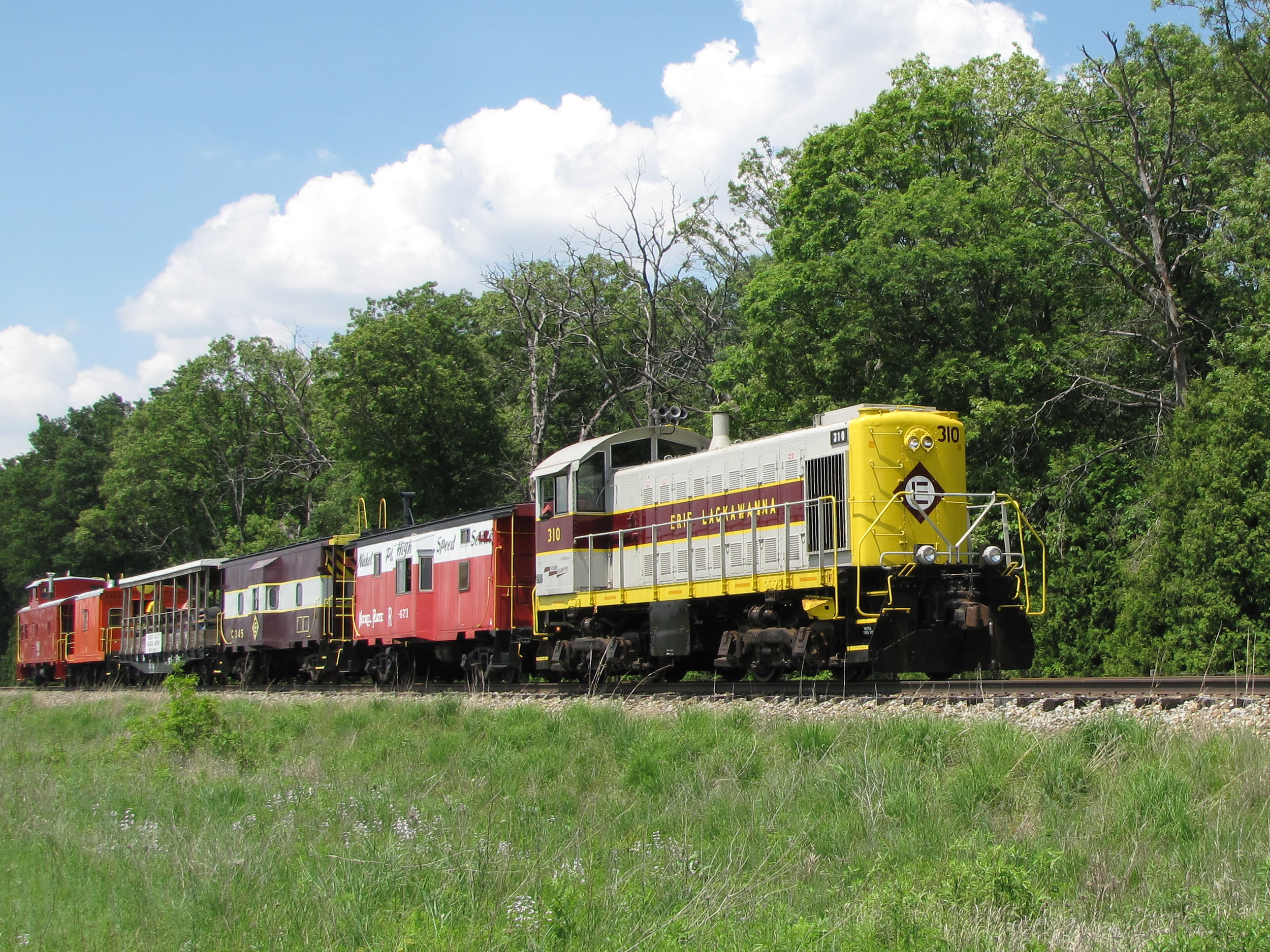
The Town of North Judson is looking to move ahead with efforts to lease its railroad. The town council will meet in special session this evening to decide whether to proceed with publishing a request for proposals.
The town’s agreement with the Chesapeake and Indiana Railroad, line’s current operator, was set to expire last December. Since then, North Judson officials have been working to find a company to lease the railroad.
However, Town Attorney Rachel Arndt has said the RFP process has been delayed by issues out of the town’s control. In the meantime, the town’s been adding short-term extensions to its agreement with the Chesapeake and Indiana Railroad, but the terms of these extensions have all but eliminated the Hoosier Valley Railroad Museum’s ability to run excursions beyond English Lake. Town officials have expressed hope that any future lease agreement will allow the museum to resume its excursions all the way to LaCrosse.
The most recent extension gives the town until August 15 to find a firm to lease the railroad. The town has already had five firms express interest in the line.
Tonight’s meeting starts at 6:00 p.m. at North Judson Town Hall.
Friday, May 13, 2016
North Judson Extends Agreement with Railroad Operator, Challenges Remain for Museum Trains
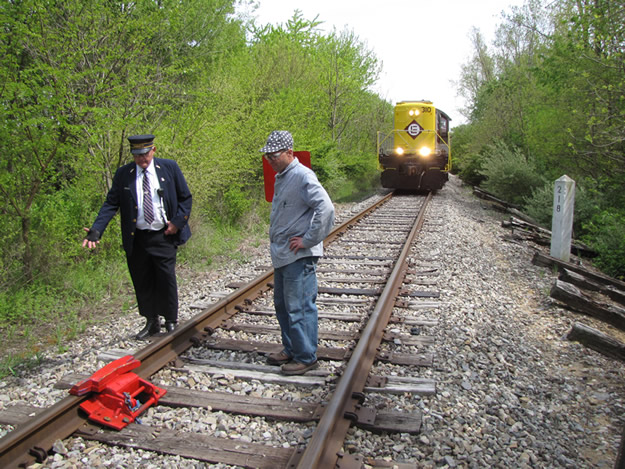
The Hoosier Valley Railroad Museum’s excursions to LaCrosse will likely remain suspended for at least the next few months. The North Judson Town Council voted Thursday to extend an agreement with the Chesapeake and Indiana Railroad, the operator of the line.
Town Attorney Rachel Arndt says the original operating agreement was set to expire in December. It had been extended until this month to give the town a chance to accept proposals for a lease of the line, but Arndt says the process has taken longer than expected, “Because of some delays that were out of our hands, really, we’re waiting for some information so that we can publish the RFP, we’ve had to agree to another extension, and we’re doing that for a couple reasons: One, so that we can guarantee some passenger excursions on the line. And the other reason is so that we can guarantee continued payments of revenue shares to the town which funnels into a maintenance fund for the railroad.” The extension approved Thursday gives the town until August 15 to find a firm to lease the railroad.
However, the Hoosier Valley Railroad Museum has been opposing the extended agreement, due to its restrictions on the museum’s passenger trips to LaCrosse. While the excursions to English Lake are allowed to continue, the museum is only allowed to run two trains to LaCrosse during the term of the extended agreement. Even then, the museum would have to make a request at least 30 days in advance and would require the approval of both the Town of North Judson and the Chesapeake and Indiana Railroad.
That may be a bit of a challenge. Museum officials say that the Chesapeake and Indiana has decided to store rail cars on the line in LaCrosse, further complicating issues. Meanwhile, the operator says it will no longer maintain the segment of track between English Lake and North Judson, leaving that responsibility up to the town for now.
Arndt says there are a few reasons why the town agreed to restrict the museum’s trips to LaCrosse, “The biggest one was that we were having some insurance concerns come up that we tried to iron out and those are about ironed out, but that was one of the requests that the other parties made to us as a point of settlement to get this extension done, and the town really just had to balance the downside of doing that with the benefit of getting the continued revenue shares.”
Arndt and members of the North Judson Town Council said if the town didn’t agree to the terms of the extension, the operating agreement would expire. That would mean control of the railroad would pass to the Surface Transportation Board, leaving the town with no way to ensure that the museum’s excursions could continue.
Museum officials argued that the operation of the excursion trains should already be protected, as one of the stipulations of the grant funding provided by the Indiana Department of Transportation in 2004 to allow the town to buy the line. The terms of the grant imply that freight traffic may not interfere with the museum or its excursions, but museum officials say these conditions are currently being ignored.
However, Arndt says that provision may not be enforceable due to conflicts with federal law, and a legal discussion with INDOT continues. As for the terms of the new extension of the operating agreement, Arndt says INDOT approves.
The LaCrosse trips are considered a major tourist draw for the museum, and the uncertainty of the situation has caused significant challenges for both the museum and other groups. For example, the LaCrosse Public Library regularly partners with the museum for programs and special events there. Doug Kosloske, vice president of the Hoosier Valley Railroad Museum Board of Directors, says he just wants a solution that benefits everyone. “We’re very concerned when we start losing the ability to do things like go to LaCrosse,” he says. “Is it going to cut at our income? Yes. Is it going to kill us? Well, figure out a way to do it like we always have. But the point is, we’d like to resolve this and get back to where we all can play together nicely. People can make money running cars. People can make money shipping grain. People can make money by owning a railroad. We don’t make money. We just are trying to be the caretakers of history.”
Arndt says once a lease is finally signed, the museum may see some additional protections, “The long-term goal of the town is to give more teeth to any agreement that we have. And so what I’d like to see is some very specifically outlined passenger excursion details, so they get to do x amount of trips per month, if we’re going to do any expansion in services, adding provisions in for those, so that’s the plan.”
Town officials say they’ve already heard from five firms interested in leasing the line.
Subscribe to:
Posts (Atom)